Building Something That Listens First
Room To Care has been building quietly. We partnered with the Rebecca Bender Initiative and New Friends New Life to reach human trafficking survivors willing to share their experiences for Through Their Eyes. Eight people sat down with us. Their voices are shaping the program as it moves toward production. We also want to be transparent about our fundraising and what we need next. This is a full update on where we are and where we're headed.
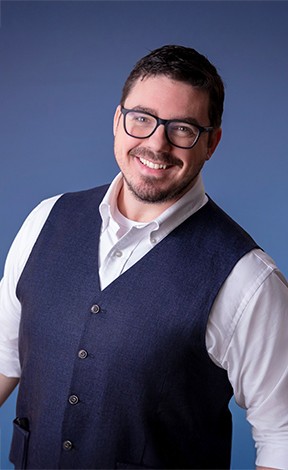
Scott Burch
Founder & Executive Director
We have been quiet for a while. That was intentional. The past several months have been about doing the work, not performing it. And now we want to share where things stand, what we've been building, and how you can help us take the next step.
Connecting with the People Who Know This Fight Best
From the beginning, Room To Care committed to something specific: Through Their Eyes would be built with survivors, not just about them. That commitment meant we needed to find the right partners, people and organizations who had already earned the trust of survivor communities and who understood what ethical collaboration looks like.
We found that in Rebecca Bender and Bianca Davis.
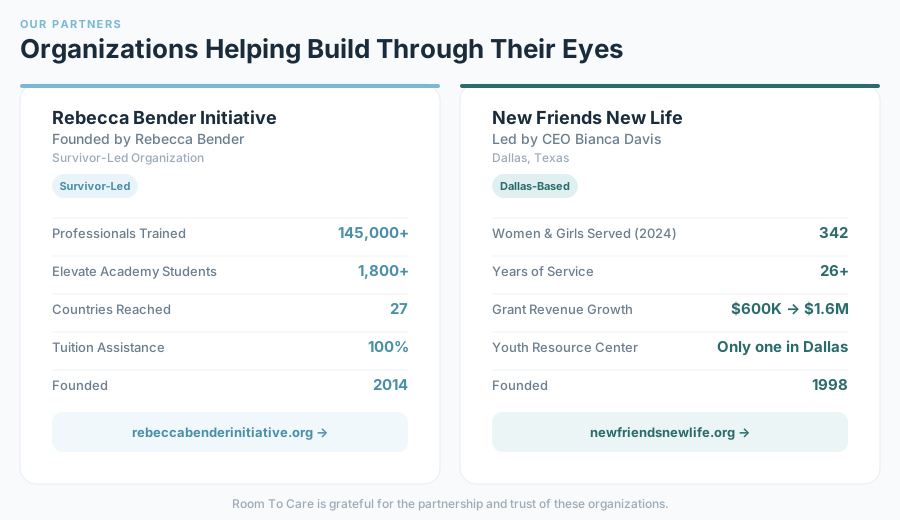
Rebecca Bender is the founder and CEO of the Rebecca Bender Initiative, a survivor-led organization that has become one of the most recognized names in the anti-trafficking movement. Rebecca is herself a survivor of nearly six years of trafficking. After escaping in 2007, she built her life back from scratch, earned a master's degree, and eventually launched an organization that now operates at a national scale. Through the Initiative's EQUIP program, her team has trained over 145,000 professionals, including FBI agents, Homeland Security personnel, regional law enforcement, medical professionals, and community service providers. The Initiative also runs Elevate Academy, the largest online school for human trafficking survivors in the world. Since its founding in 2014 with just five students, Elevate Academy has grown to serve over 1,800 students across the United States and 27 countries, offering 100% tuition assistance for professional development and economic empowerment courses. Rebecca was appointed to the United States National Advisory Council and serves as an advisor to Aequitas, A21, and the HSI North Texas Task Force. She is regularly called upon as a subject matter expert for investigations and as an expert witness in trafficking cases.
Bianca Davis is the CEO of New Friends New Life, a Dallas-based nonprofit that has been restoring and empowering trafficked and sexually exploited women, teen girls, and their children since 1998. Under Bianca's leadership, NFNL has expanded significantly: the organization served 342 women and girls in 2024 alone, providing trauma-informed counseling, case management, economic empowerment tools, and educational support. Bianca spearheaded the creation of the City of Dallas Human Trafficking Awareness Dashboard, believed to be one of only three of its kind in the country, which went live in January 2024. NFNL also opened a Learning Academy in March 2024 where survivors can prepare for their GED and pursue further education, launched Liberty Street Garden as a workforce initiative, and operates the only teen drop-in Youth Resource Center of its kind in Dallas, serving trafficked and high-risk girls ages 12 to 22. Bianca is a 2023 Presidential Leadership Scholar, a graduate of the Dallas FBI Citizens Academy, and the recipient of the 2024 Women in Business Award from the Dallas Business Journal. Her leadership has grown NFNL's grants program from $600,000 in revenue in 2019 to $1.6 million in 2023.
These two leaders and their organizations are doing extraordinary, sustained work. We are grateful they opened their networks to us.
What Happened During the Interviews
Rebecca and Bianca helped us reach out to survivors through their newsletters and communications, letting people know what Room To Care was building and that we were looking for individuals willing to share their experiences. Thirteen survivors responded. From that group, we conducted eight interviews over Zoom and Google Meet with individuals primarily based in Texas, along with a few from other states.
We went into those conversations with a clear intention: to listen. Room To Care had already developed the general framework for Through Their Eyes based on our previous work building human trafficking awareness programming for the hospitality industry. We understood the indicators, the patterns, the legal definitions. But understanding the mechanics of trafficking is different from sitting across from someone who lived it. These interviews were about making sure the program carries the weight of real experience, that it reflects what survivors actually want people to understand rather than what outsiders assume they should hear.
We are not going to share the details of those conversations here. That's not what they were for, and the people who trusted us with their stories deserve to have those stories handled with care. What we will say is this: those interviews confirmed that the direction we're building in is the right one, and they gave us perspective and insight that will shape how Through Their Eyes communicates its most critical lessons.
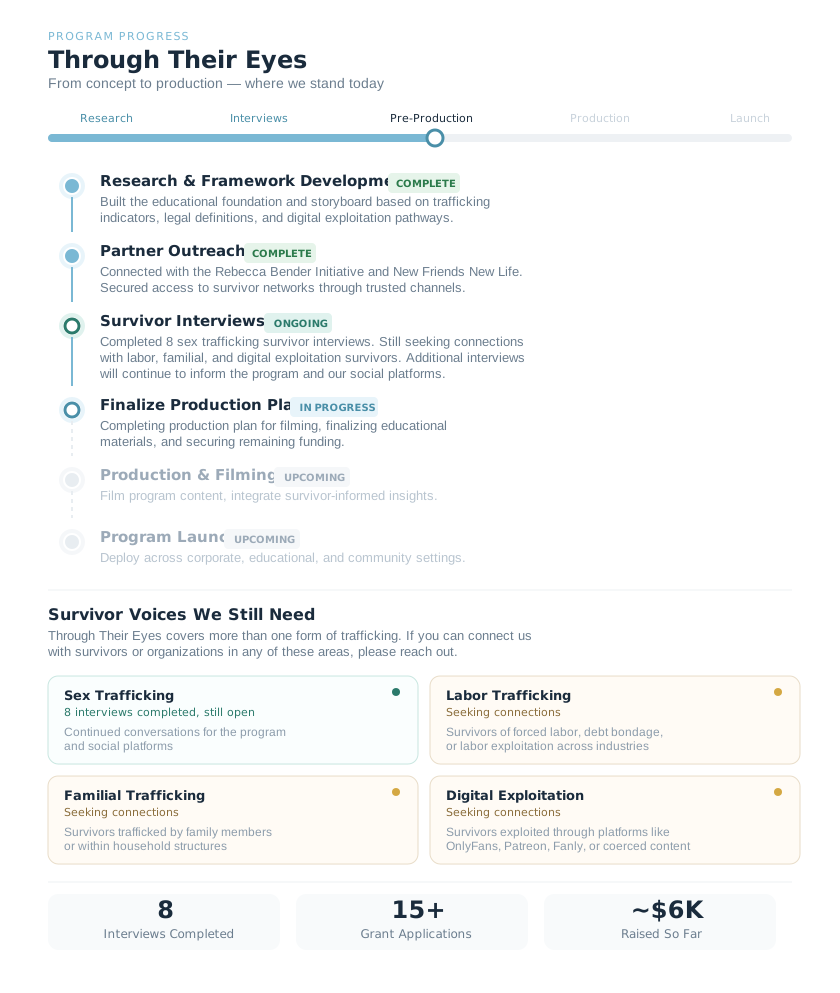
Those eight interviews are a starting point, not a finish line. We want to continue hearing from sex trafficking survivors for both the program and our social platforms. And there are entire dimensions of trafficking that Through Their Eyes must address where we haven't yet made those connections.
The Perspectives We Still Need
Through Their Eyes is designed to cover the full scope of human trafficking, and that means the program needs to reflect more than one type of survivor experience. The eight interviews we've conducted so far focused on sex trafficking. That input has been invaluable, and those conversations remain open. But the program also needs voices from other forms of trafficking that are often underrepresented in public conversation.
We are actively seeking connections with survivors of labor trafficking, people who have experienced forced labor, debt bondage, or exploitation in industries like agriculture, construction, domestic work, restaurants, or manufacturing. Labor trafficking is one of the most widespread and least reported forms of trafficking globally, and Through Their Eyes cannot responsibly address the issue without including those experiences.
We are also looking to connect with survivors of familial trafficking, individuals who were trafficked by family members or within household structures. This form of trafficking is particularly difficult to identify and discuss, and the perspectives of those who have lived through it are critical to building education that reflects reality.
And we need to hear from survivors of digital exploitation, specifically people who were coerced, manipulated, or forced into creating content on platforms like OnlyFans, Patreon, Fanly, or camming sites. The line between voluntary participation and exploitation on these platforms is something that Through Their Eyes needs to address clearly and carefully, and the only way to do that responsibly is with direct input from people who have experienced it.
If you are a survivor in any of these areas and are open to sharing your experience, or if you work with an organization that serves these communities and can help facilitate a connection, we want to hear from you. You can reach us through roomtocare.com.
Where Through Their Eyes Stands Now
Through Their Eyes is a modular, industry-ready human trafficking awareness and prevention program. It is designed to be deployed across corporate environments, hospitality settings, educational institutions, and community organizations. The program includes content on digital exploitation pathways, something that many existing training programs still underaddress.
Before these interviews, Through Their Eyes was in pre-production. We had the storyboard, the research foundation, and the structural framework. The survivor interviews were a critical milestone in moving us from pre-production toward production and filming. We are now closer than we have ever been to bringing this program to life in its final form.
The work ahead includes finalizing the production plan, securing the remaining funding for filming and post-production, and continuing to build the educational materials that will accompany the video content.
The Fundraising Reality
We want to be transparent about where we stand financially, because that's how Room To Care operates.
We have submitted over 15 Letters of Inquiry and grant applications to foundations and funding organizations. We are close to $6,000 in total funds raised, with three individuals supporting us through monthly recurring contributions. Every one of those dollars and every one of those recurring commitments matters to a startup 501(c)(3) trying to build something that doesn't cut corners.
But we need more. Specifically, we need help making connections.
If you know an individual who cares about child safety, digital exploitation, or trafficking prevention and wants to support an organization building education from the ground up, we want to talk to them.
If you know a company looking for a meaningful corporate sponsorship opportunity tied directly to an anti-trafficking education program, we want to talk to them.
If you know a foundation or grant-making organization that funds early-stage nonprofits doing prevention and education work, we want to talk to them.
Room To Care is not asking people to fund an idea. We have the framework, we have the partnerships, we have the survivor input, and we have the team. What we need is the financial support to get Through Their Eyes from where it is now to where it needs to be: in front of the people who can use it.
Why This Matters Right Now
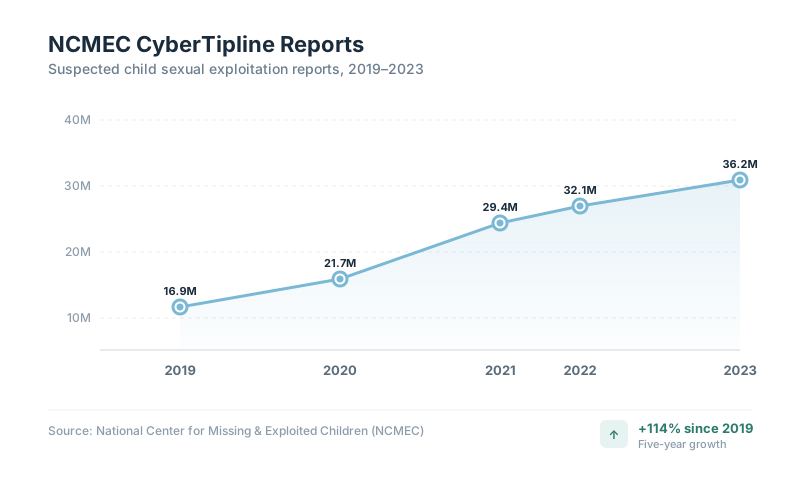
The numbers continue to demand attention. According to NCMEC CyberTipline data, reports of suspected child exploitation have climbed steadily year over year:
2019: 16.9 million reports
2020: 21.7 million reports
2021: 29.4 million reports
2022: 32.1 million reports
2023: 36.2 million reports
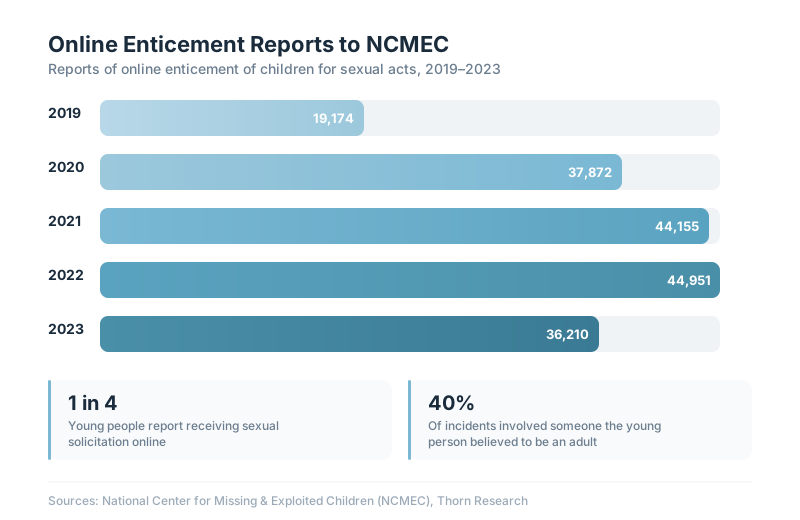
Online enticement reports specifically have followed a similar trajectory, rising from 19,174 in 2019 to over 44,000 in 2022. According to Thorn research, 1 in 4 young people report receiving sexual solicitation online, and 40% of those incidents involved someone the young person believed to be an adult. Social media, online gaming, direct messaging, and live streaming remain the most common entry points.
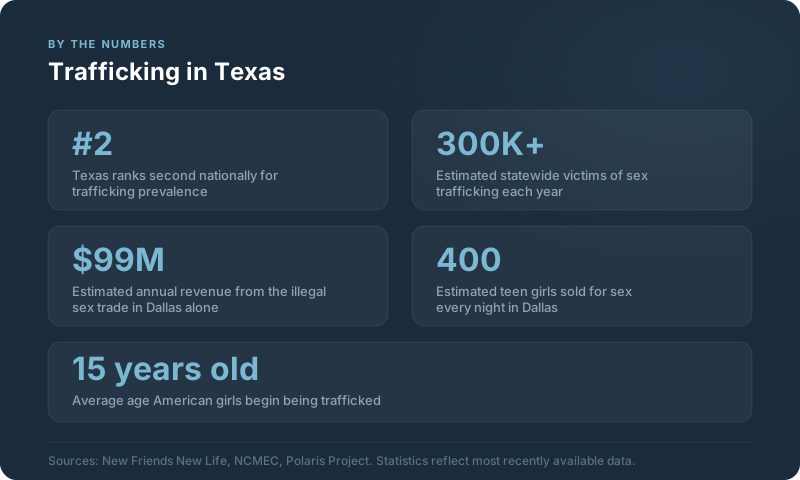
Texas ranks second nationally for trafficking prevalence, with an estimated 300,000 or more statewide victims of sex trafficking each year. In Dallas alone, the illegal sex trade generates an estimated $99 million annually, and an estimated 400 teen girls are sold for sex every night in the city.
These numbers are why organizations like the Rebecca Bender Initiative and New Friends New Life exist. They are why Room To Care exists. And they are why Through Their Eyes needs to reach production.
How to Support This Work
There are several ways to get involved right now.
Donate directly to support the development of Through Their Eyes and Room To Care's educational programs. Every contribution goes toward program production, survivor-informed content development, and expanding our reach.
Visit givebutter.com/RoomToCare2026 or text RTC2026 to 53-555 to give.
Help us connect with survivors. We are specifically seeking introductions to labor trafficking survivors and organizations, familial trafficking survivors and advocates, and digital exploitation survivors, including those with experience on platforms like OnlyFans, Patreon, Fanly, or camming sites. If you know someone willing to share their story, or an organization that serves these communities, please reach out through roomtocare.com.
Make a funding introduction. If you have a contact at a foundation, a corporate giving program, or simply someone who cares about this issue and has the capacity to help, please connect us. For a startup nonprofit, the right introduction can change everything.
Share this post. Visibility matters. The more people who understand what Room To Care is building and why, the larger the community of support becomes.
Learn more about the organizations helping make this work possible:
And visit roomtocare.com to learn more about Room To Care and Through Their Eyes.
Room To Care, Inc. is a 501(c)(3) nonprofit building survivor-informed educational programs addressing human trafficking, digital exploitation, and systemic vulnerability.
Read more
Behind the Stories: A Week of Filming
Room To Care spent this week in Frisco with survivors, cameras rolling and hours of footage captured. Here's where things stand and what comes next.
Scott Burch
Founder & Executive Director

Through Their Eyes Production Update: Filming Starts Next Week
Our first survivor interviews for Through Their Eyes begin April 28th. Here's what that means, what you'll see, and what we still need.
Scott Burch
Founder & Executive Director
Open Doors at The Potter's House
Room To Care joined VisioTech at The Potter's House in Dallas for an honest conversation about what it actually takes to keep children safe in an always-online world.
Scott Burch
Founder & Executive Director