Meet the Director
Most nonprofit founders start with a mission statement. Devon "Scott" Burch started with a feeling he could not shake: that the people who needed the most help were often the ones no one was paying attention to. On his 39th birthday, our founder shares his story in his own words. This is the first post in a new series introducing the people behind Room To Care.
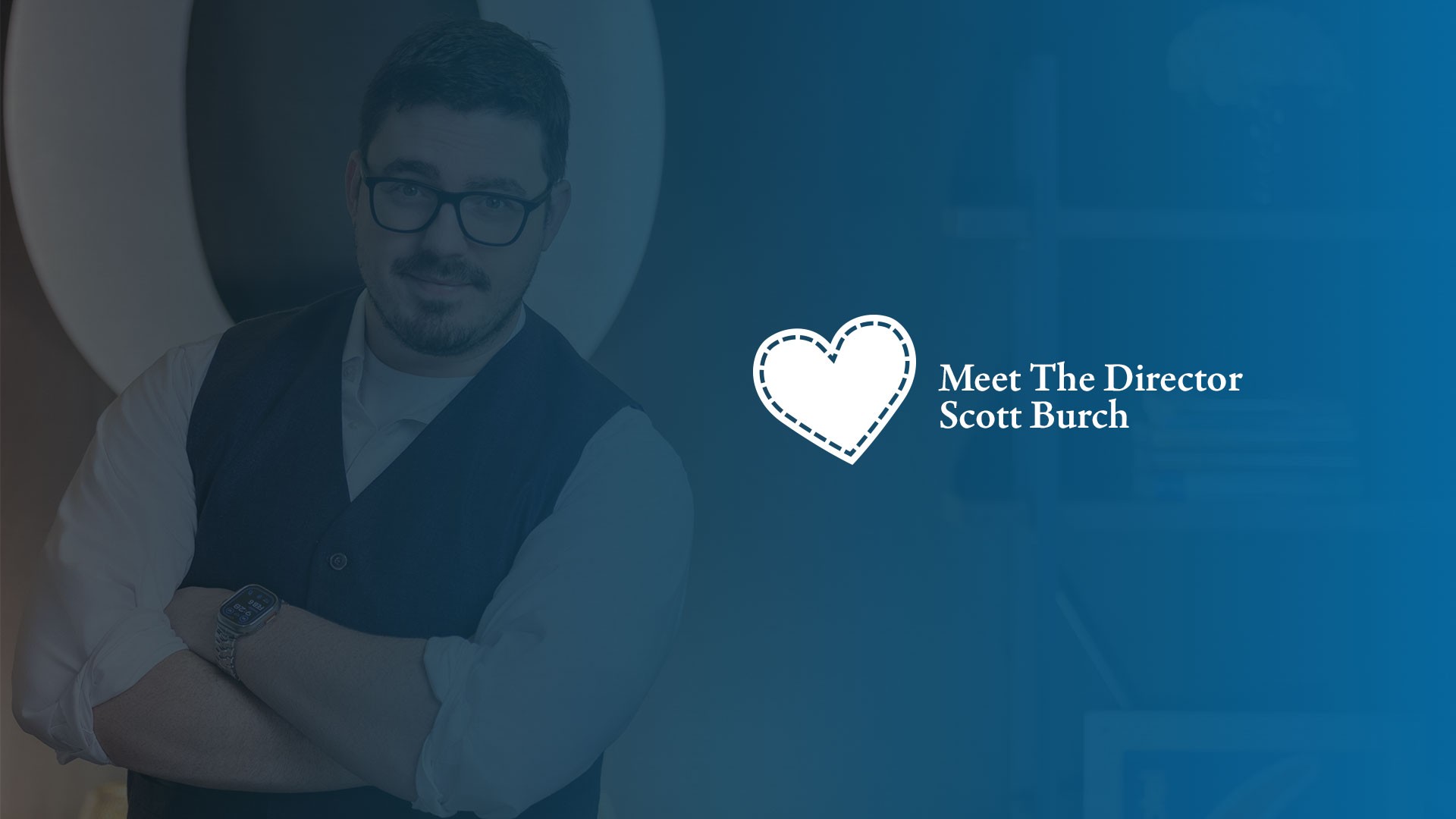
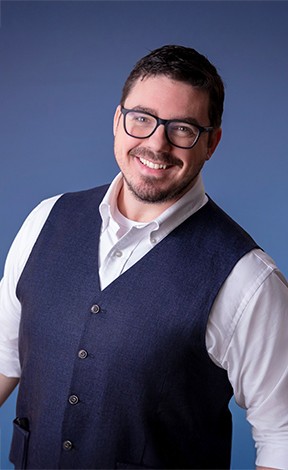
Scott Burch
Founder & Executive Director
This is the first post in a new series where we introduce the people behind Room To Care. Our Board, our key partners, and the individuals helping build Through Their Eyes. We are starting with the person it makes sense to start with: our founder and executive director.
Today, on his 39th birthday, Devon "Scott" Burch shares his story in his own words.
Where I Come From
I do not talk about my life story often. At least not publicly. And not in detail. For a long time, I thought the goal was to keep moving forward and let the work speak for itself. Build something better. Prove what is possible. Keep going.
But as I turn 39, I have been thinking about something a friend told me recently: people do not just support organizations. They support the people behind them. And if Room To Care is asking the world to pay attention to stories that are hidden, overlooked, or ignored, maybe it is time I stopped hiding my own.
So here it is. Not a polished bio. Not a LinkedIn summary. The real thing.
I was born on an Air Force base in Utah. By the time I was about a year old, I had been moved to live with my maternal grandmother in Arlington, Texas. That is where I grew up. Arlington is the only hometown I have ever really known, even if there were plenty of times I felt like I belonged somewhere else. Ok, most of my life I've felt that I have belonged somewhere else, more so outside of Texas...
We lived on welfare, food stamps, and housing assistance. Not as a temporary rough patch. That was the baseline. The kind of poverty that does not just mean you do not have things. It means you learn early what it feels like to be invisible. You learn how systems treat you when you do not have money. You learn to read a room, fast, because safety is not guaranteed and nobody is coming to explain the rules.
I was homeschooled from second through sixth grade, then attended a private prep school, which kicked my ass academically. I am dyslexic, have ADHD, and struggle with auditory processing, which meant that school, in every form I experienced it, felt like it was built for somebody else. When I was young, I dreamed of becoming a Pixar animator or director. A big dream for a kid with no money, no connections, no one who had ever walked that path. It felt impossible. But the core of that dream, the belief that stories told with care and craft can make people feel something real, that never left me. It just changed shape.
My childhood also included mental and emotional situations. I am not going to unpack all of it here, but I will say this: it shaped me in ways I am still sorting through. It sharpened both my resilience and my sensitivity to people who are living through things they cannot talk about out loud.
The People Who Showed Up
I want to be careful here, because if I only talked about what was hard, I would be telling an incomplete story.
There were people who showed up for me. And I want to name them, because they deserve it.
Through Big Brothers Big Sisters, I was matched with a man named David Elmore. David was an AT&T area manager, a U.S. Navy veteran, a lifelong tech enthusiast, and someone who was genuinely present. Not once. Not for a photo op. Consistently. Over years. He became my Big Brother through the program, and over time, that relationship became something much deeper than mentorship.
But it was not just David. His wife, Gail, and their children, Ryan and Angela, accepted me into their family. I was not a project to them. I was not a charity case. I was family. When David passed away in February 2023, his obituary did not list me as a former program participant. It listed me alongside his wife, his children, and his brother. His "little brother."
David was honored as Big Brother of the Year twice and served as Board President for Big Brothers Big Sisters Dallas and North Texas. He loved technology, classical music, and severe weather. He once helped build the weather radar that WFAA used to track storms. He was the kind of person who changed lives by being present, and he changed mine.
Beyond the Elmores, I had aunts and uncles and cousins, the Bakers and the Palmers, who tried to support me growing up. The three Palmer brothers were especially close to me. We were practically brothers growing up. Those relationships mattered more than I had the language to express when I was young.
The reason I am telling you all of this is because Room To Care is built on a belief that one person showing up can change the trajectory of someone's entire life. That is not a slogan for me. It is a fact and one that I lived it.
The Family I Am Building
My son, August, was born in November 2014. He is, without question, the biggest force in my life. Everything I build, everything I push through, every late night, every grant application, every moment of doubt I work past, he is a huge part of why.
I want him to feel loved, safe, supported, and free to dream bigger than the limits I grew up with. I want him to know that where you start does not have to define where you end up. A lot of my ambition is not about personal success. It is about breaking cycles so that the next generation does not inherit the same ones.
I also have a step-son, Connor, who is almost 26. I have known him since he was 11, and watching him grow into the man he is becoming has been one of the most rewarding parts of my life. Right now, Connor is on a medical mission trip in Kenya, and I could not be prouder of him.
And I need to talk about my younger half-brother, Sky.
Sky and I share a mother, and his childhood was different from mine in some ways but painfully similar in others. He grew up with our mother through multiple abusive relationships, various step-fathers and boyfriends, instability that no kid should have to navigate. And despite all of it, he broke the cycle. He is currently serving in the United States Marine Corps, married, with two beautiful daughters. I could not be more proud of who he has become. We still have a strong relationship, and watching him build the kind of life and family he never had growing up is one of the things that gives me the most hope.
When I talk about breaking cycles, I am not speaking in abstractions. I am watching it happen in my own family.
How I Got Here
I did not take a straight path to running a nonprofit. I started freelancing in middle and high school and never really stopped building.
I worked at Apple as a Genius, an Apple Creative, and a Visuals Team Lead. Those roles taught me how to teach, how to communicate complex ideas with emotional intelligence, and what good leadership looks like. They also taught me what bad leadership costs. There is a phrase I heard more than once in corporate environments: "Give them enough rope to hang themselves." I hated that phrase then and I hate it now. Even struggling employees deserve real guidance, real support, and real leadership. That belief runs through everything I do.
From Apple, I moved into digital training, instructional design, creative direction, and media production. I worked with FilesAnywhere, Cash America, Saladmaster, and G6 Hospitality. At every stop, the question was the same: how do you take something people are supposed to learn and make it actually matter to them?
In 2011, I founded TeraPixel Studios (TeraPixel LLC), my creative production and media company. TeraPixel handles filming, creative direction, visual storytelling. The longer-term vision for TeraPixel Studios is a creative hub for photographers, artists, and other creatives trying to build sustainable businesses and careers.
Room To Care is separate from TeraPixel by design. Room To Care is the mission-driven arm. It exists to create educational storytelling experiences around issues that affect millions of people but remain invisible to most. And its flagship program is Through Their Eyes.
Why Trafficking
People ask me sometimes how I ended up focused on human trafficking. The honest answer is that I did not choose it the way most people choose a cause. I recognized it.
Growing up without safety, without stability, without anyone making sure you were okay, you develop a sensitivity to people who are living inside systems that are failing them. You notice who gets overlooked. You notice who gets used. You notice when the brochure says one thing and the reality says something else entirely.
Trafficking is one of the clearest examples of that gap. The public perception, shaped by movies and social media, focuses on dramatic rescue scenes. The reality is quieter, more systemic, and far more common than most people want to believe. It happens in hotels, in restaurants, on construction sites, in neighborhoods, on platforms kids use every day. The people it affects are often hidden in plain sight.
I wanted to build something that closed the distance between what people think trafficking looks like and what it actually is. Not through shock value. Through stories told with honesty, dignity, and enough emotional weight to make someone care beyond the length of a training video.
That is Through Their Eyes. Survivor-informed. Modular across industries. Designed to feel more like something you would choose to watch than something HR requires you to click through. Built independently of government funding because, as we wrote about recently, that safety net can vanish overnight.
The Stuff That Makes Me, Me
I do not want this post to read like a tragedy followed by a mission statement. There is a lot more to me than the hard parts.
I love movies. I love music. I curate an annual Apple Music playlist series called Masterful Discovery, a tradition built around the idea that the right song at the right moment can unlock something words alone cannot reach.
I am a Star Trek fan and a Star Wars fan. I hike. I build things in Framer at midnight. I think in stories, even when the task in front of me is a spreadsheet. I have a playful side and a sarcastic streak and a brain that is always trying to connect dots in unexpected ways.
I once made the local news for wandering around Arlington catching Pokemon. WFAA featured me in their 2016 coverage of Pokemon Go's launch. I was 29 years old, walking around with my phone out, completely invested in catching digital creatures in the real world. That person is still in me. The curiosity. The willingness to be enthusiastic about things that other people might consider silly. I think that quality is important, actually. The willingness to care openly about things, even small things, is what keeps you human when the work gets heavy.
What I Am Asking For
I am not asking for sympathy. My story is not unique. Millions of people grew up the way I did. What makes my situation different is not what happened to me. It is what I decided to do with it.
Room To Care does not have a large team. It does not have institutional backing. It has me, a growing network of partners including the Rebecca Bender Initiative and New Friends New Life, eight survivor conversations completed so far, and the conviction that education built with care and honesty can change how entire industries respond to trafficking.
If any of this resonated with you, here is what helps most:
Donate. Every dollar supports the development of Through Their Eyes.
roomtocare.com/donate | givebutter.com/RoomToCare2026 | Text "RTC2026" to 53-555
Make an introduction. Foundations, corporate training buyers, survivors willing to share their experience. One connection can change the timeline of this entire project.
Share this post. Not as a marketing play. Because the more people who understand why this work exists, the more people show up to build it.
Follow the work.
Room To Care: roomtocare.com | Through Their Eyes: throughtheireyes.co
This is the first post in our "Meet the Team" series. In the coming months, we will introduce you to the Board members, partners, and key individuals helping build Room To Care and Through Their Eyes. If you are interested in joining that team, reach out at roomtocare.com.
Happy birthday to me, I guess. 39. Let's see what we build this year.
Read more
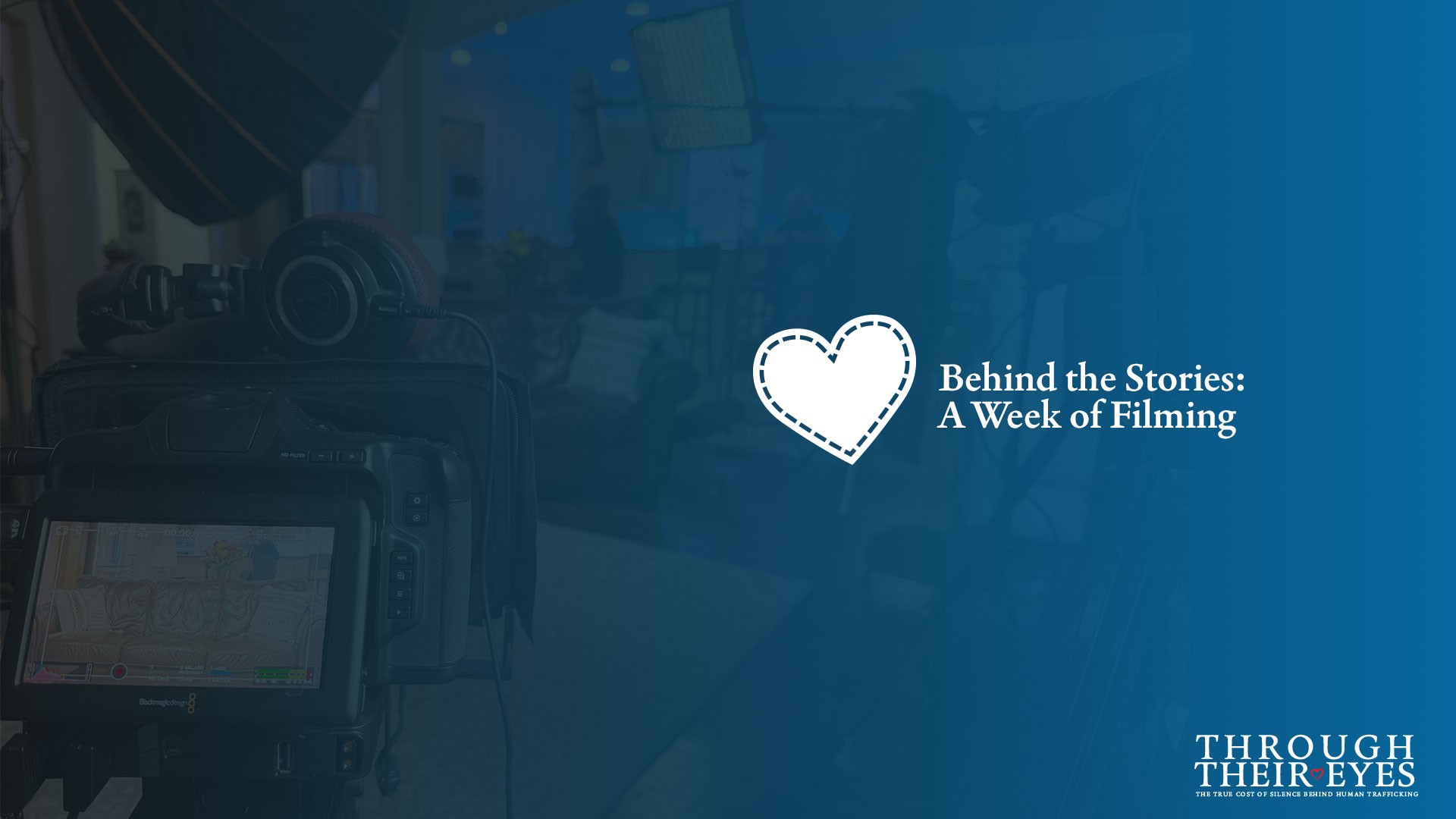
Behind the Stories: A Week of Filming
Room To Care spent this week in Frisco with survivors, cameras rolling and hours of footage captured. Here's where things stand and what comes next.
Scott Burch
Founder & Executive Director
Through Their Eyes Production Update: Filming Starts Next Week
Our first survivor interviews for Through Their Eyes begin April 28th. Here's what that means, what you'll see, and what we still need.
Scott Burch
Founder & Executive Director
Open Doors at The Potter's House
Room To Care joined VisioTech at The Potter's House in Dallas for an honest conversation about what it actually takes to keep children safe in an always-online world.
Scott Burch
Founder & Executive Director