Why Through Their Eyes Was Built This Way
The gap between what people think trafficking looks like and what it actually is costs lives. Through Their Eyes was built to close that gap, survivor by survivor, module by module. Here's why every decision behind it matters.
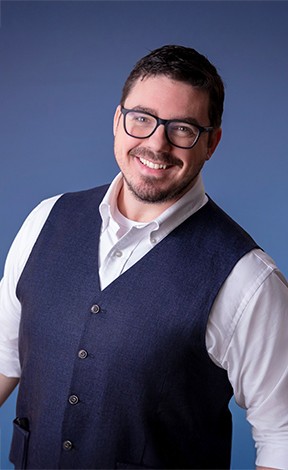
Scott Burch
Founder & Executive Director
I grew up less than two miles from where Amber Hagerman was taken in Arlington, Texas. She was three and a half months older than me. Even with that proximity, knowing the name, the neighborhood, the year, I still carried the same misunderstandings about human trafficking that most people do. I thought I knew what it looked like. I thought I'd recognize it. I was wrong about almost all of it.
That gap between what people think trafficking looks like and what it actually is costs lives. It leaves witnesses who don't know they're witnesses. Industries that don't know they're complicit. Survivors who are never seen, because the people around them were trained on the wrong picture.
Through Their Eyes was built to close that gap. But to understand why it works the way it does, you have to understand what wasn't working first.
The Problem with Existing Training
Standard compliance training on human trafficking follows a formula. Short video. A few slides. A quiz at the end. Box checked, liability covered, employees back at their stations within the hour. And almost none of it sticks.
I've sat through versions of this. I paid attention. I took it seriously. And almost nothing I learned would have changed how I responded to a real situation. The content wasn't wrong exactly, but it was clinical in a way that made trafficking feel like something that happened somewhere else, to someone else, under conditions any reasonable person would immediately recognize as dangerous.
That's not how trafficking works.
When I was brought in to help rebuild a human trafficking awareness program for a hospitality company with properties across the country, I made a different choice. Instead of starting with red flags and checklists, I started with people. Real survivors. Real stories. A real attempt to help frontline workers see themselves as part of the solution: housekeepers, front desk staff, security teams, people who are actually there when something is wrong.
Other organizations started using the program. It won recognition in the industry. More importantly, people came back saying it changed how they showed up to work. That's the whole point.
Why We Started Over
When the company was sold and the program was shelved, I couldn't just move on. The need didn't go away. What changed was my understanding of what it actually takes to build something that survives a change in ownership.
Room To Care was formed with one intention: to build survivor-informed educational content as protected intellectual property, governed by a nonprofit board, with enough structural permanence to outlast any single organization's priorities. We weren't just building a program. We were building an institution. One with legal protections for the IP, a Board of Directors with real expertise in hospitality, finance, and nonprofit governance, and a roadmap that extends well beyond human trafficking awareness.
That decision shapes everything about how Through Their Eyes was designed.
Why Survivor-Informed Isn't Optional
There's a version of this training that could have been built without survivors. It would have been faster, cheaper, and far less accurate.
Survivors don't just add emotional weight to this program. They correct it. They identify the assumptions baked into standard frameworks. They point to the moments where a trained eye would have made a difference: a hotel hallway, a healthcare intake form, a transit hub. They explain exactly why those moments get missed. That knowledge doesn't live in a policy document. It lives in people who were inside the experience.
Our Survivor-as-Producer model reflects this. Survivors who shape the curriculum are credited as Producers. Those who appear on screen are credited as Consultants. They're compensated as the subject matter experts they are. Because that's what they are. This isn't trauma disclosure. It's knowledge transfer.
And it changes what the training asks of its audience. Instead of asking viewers to identify trafficking from a safe distance, Through Their Eyes asks them to recognize the full human context of exploitation and to understand their own potential role in either missing it or responding to it.
Survivors don't just add emotional weight to this program. They correct it.
Why Modular and Industry-Specific
A hotel housekeeper and an emergency room nurse are both frontline workers who could realistically encounter trafficking. They also work in completely different environments, see different warning signs, and have different options when something feels wrong. Training built for one won't meaningfully reach the other.
Through Their Eyes was built in modules for this reason. Core content covering sex trafficking, labor trafficking, familial trafficking, and digital exploitation creates a shared foundation. Industry-specific tracks then translate that foundation into the language and context of a particular environment: hospitality, healthcare, transportation, retail, law enforcement.
Each module is designed to be watchable in a real work context, by someone with fifteen minutes and a purpose. And the structure allows the program to grow, with new industries added and existing modules updated as trafficking trends shift, without starting over every time.
Why Digital Exploitation Is in Here
A decade ago, human trafficking awareness programs focused almost entirely on physical locations. Motels. Truck stops. Massage parlors. Those environments still matter. But trafficking has moved, and a program that doesn't address digital pathways is describing a problem that no longer looks the way it used to.
Platforms like OnlyFans, Patreon, and Fanly are increasingly used as tools of coercive exploitation. Gaming platforms and direct messaging apps are documented entry points for grooming and recruitment. The NCMEC CyberTipline received over 36 million reports in 2023. These aren't edge cases. They're the current infrastructure of exploitation.
Through Their Eyes treats digital pathways as integrated, not separate, because that's how traffickers use them. Someone moved from an online recruitment into a physical trafficking situation isn't a digital exploitation victim and then a trafficking victim. They're one person, moved through multiple connected systems. The training reflects that.
Why Production Quality Is Part of the Mission
We've heard the skepticism about the production budget. We get it.
We've also watched, for years, what happens to training content that looks like it was made as an afterthought. It gets watched once on a break room TV at half-attention. Nobody changes how they do their job. The organization is legally covered and nothing else moves.
If we're asking a hotel housekeeper to trust what she sees enough to act on it, we owe her content that takes both the subject and her seriously. The production quality isn't about aesthetics. It's about the signal the work itself sends: this is worth your full attention.
Why This Is Built as IP
Through Their Eyes was built as protected intellectual property because it's the only structure that protects the work survivors put into it, sustains the mission through leadership changes, and gives the program room to grow.
Room To Care's roadmap extends into domestic violence education, workplace harassment, digital exploitation for families, and leadership development. These aren't aspirational add-ons. They're the next chapters in a curriculum built on one foundational premise: that people change their behavior when they genuinely understand what's at stake, and that understanding requires education built with empathy rather than a compliance deadline.
The IP structure protects the ability to have those future conversations. The nonprofit structure keeps the mission in the center. The board and advisory relationships make sure expertise shapes every module.

This was always meant to be bigger than one program. Through Their Eyes is where it starts.
We Can't Do This Alone
Building something that matters takes more than intention. It takes connection.
Room To Care needs funding. We'll be transparent about that. We're a small start-up nonprofit operating in a difficult environment, and the work we're doing requires real resources: production, compensation for survivors, distribution, ongoing development. If you're in a position to contribute financially, every dollar goes directly toward building content that survivors helped design and that frontline workers will actually use.
But we also need something harder to find: doors.
If you know a foundation that's serious about human trafficking prevention, labor rights, child welfare, or survivor advocacy, we want that introduction. If you're connected to a university research program, a faith community doing grassroots work, a healthcare system investing in trauma-informed training, or any organization that has stayed in the room when these conversations got uncomfortable, we want to meet them.
We're also still building out our survivor network. We've had meaningful early conversations, but we need more voices, more contexts, more types of trafficking experience represented on screen. If you know someone who might want their story to be part of something built to protect the next person, we're ready to receive that with care.
The market is hard right now. We know that. Nonprofits are competing for shrinking dollars, and the organizations funding this work are navigating the same economic pressure the rest of us are. We're not asking anyone to do the impossible. We're asking to be part of a network of people who believe this work is worth doing even when the conditions are difficult.
Because we've seen what happens when the right people find each other. We've seen survivors who thought they'd never speak publicly sit in front of a camera and find their voice. We've seen frontline workers describe a shift in how they see their job after content that actually treated them as capable of making a difference. That's not magic. That's what happens when the right resources reach the right people.
A Name That Changed Everything
This post started with Amber Hagerman. It ends there too.
A community's grief didn't stay grief. It became a system. One that now spans all 50 states and has contributed to the recovery of thousands of missing children. Amber never benefited from it. But people alive today did.
We can't change what happened to Amber. We can't undo the trafficking that has already occurred, the childhoods that were stolen, the people who were never seen. But we can do what that community did: take the weight of what happened and build something from it that reaches the next person before it's too late.
That's what Through Their Eyes is trying to be. Education transformed from grief into a tool. Survivor testimony turned into something that outlasts any single organization's priorities. The belief that the past doesn't have to be the whole story.
If you're a foundation, an organization, a survivor, an educator, or simply someone who believes that education built with real human beings is worth fighting for, we want to hear from you. Reach out at info@Roomtocare.com or donate today at https://givebutter.com/RoomToCare2026
Read more
Behind the Stories: A Week of Filming
Room To Care spent this week in Frisco with survivors, cameras rolling and hours of footage captured. Here's where things stand and what comes next.
Scott Burch
Founder & Executive Director
Through Their Eyes Production Update: Filming Starts Next Week
Our first survivor interviews for Through Their Eyes begin April 28th. Here's what that means, what you'll see, and what we still need.
Scott Burch
Founder & Executive Director
Open Doors at The Potter's House
Room To Care joined VisioTech at The Potter's House in Dallas for an honest conversation about what it actually takes to keep children safe in an always-online world.
Scott Burch
Founder & Executive Director