Words Matter When Harm Is Involved
Words shape how we understand responsibility. When trafficking-related terms are misused or misunderstood, victims are harmed and accountability becomes inconsistent. This post explores why legal definitions matter, what statistics tell us about the scale of trafficking globally and in the U.S., why misuse damages victims, and how survivor-informed education depends on clarity.

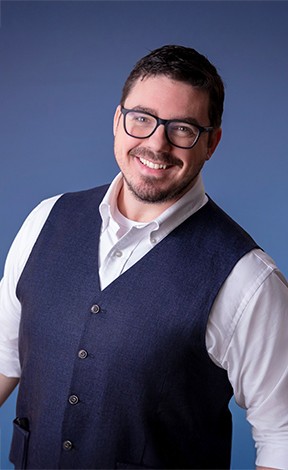
Scott Burch
Founder & Executive Director
When Language Becomes Reality
Language is not neutral. In conversations about harm, exploitation, and trafficking, the words we choose determine whether a situation is recognized, understood, or dismissed entirely.
Human trafficking is defined under U.S. law as the use of force, fraud, or coercion to compel someone to provide labor or commercial sex. When someone under the age of 18 is involved in commercial sex, that is considered trafficking regardless of whether those elements are present.
This legal framework is intentional. It exists to protect victims from being written off as “choices” or “bad decisions.” When terms like force or coercion are blurred, the experiences of those harmed are too.
But language is only the first step. Real consequences flow from how language is used.
The Scope of the Problem
Trafficking is not rare or isolated. Globally, hundreds of thousands of victims are detected every year, but that number is widely understood to represent only a fraction of the real scale.
Even official detection tells a story. Reports show that the number of victims identified globally rose significantly in recent years, suggesting both increased activity and improved recognition. In the Global Report on Trafficking in Persons, the number of detected victims increased by about 25% between 2019 and 2022, with more children being exploited.
Other estimates underscore the human scale of the crisis. The International Labour Organization has estimated around 24.9 million people living in situations of trafficking worldwide, including millions in forced labor and millions more in commercial sexual exploitation.
And while global numbers are imperfect, data from the National Human Trafficking Hotline in the United States shows that in a single recent year, the hotline received nearly 10,000 potential cases with more than 16,000 suspected victims reported.
These numbers remind us that trafficking is not a distant problem. It emerges wherever vulnerability intersects with deception and control.

When Misunderstanding a Term Becomes Harm
Misusing terms like trafficking, exploitation, or coercion does more than confuse law or policy. It changes how victims are seen.
If force is understood only as physical violence, we miss situations where coercion is psychological, financial, or tied to identity documents. If fraud is dismissed as a “misunderstanding,” we fail to recognize how false promises trap people in cycles of dependency.
These misunderstandings can even influence how cases are handled in court or in public narratives, leading to damage that extends far beyond a single conversation.
When a victim’s experience is minimized because the language used to describe it was unclear or misapplied, the harm compounds. It reinforces the very barriers that prevent victims from coming forward.
Why Clarity Helps Accountability
Clear legal frameworks matter because they set a standard. They tell victims what protections exist and they tell professionals what patterns to look for.
When language becomes murky, perpetrators find room to evade responsibility, and victims find reason to doubt whether coming forward will lead to justice.
Accountability depends on consistency of words and action.
When terms like force, fraud, and coercion are treated as technicalities rather than realities of power and harm, victims lose ground. When language shifts to protect reputation or influence perception, the system loses credibility.
Survivors deserve more than ambiguity. They deserve clarity that leads to responsibility.
Why This Matters for Education

Through Their Eyes is being designed with this understanding at its core. Education must equip people to recognize what trafficking actually looks like, how the legal framework works, and why certain patterns of deception, control, or coercion are not accidents.
When education is precise, prevention becomes possible because people are not left guessing what harm means in a real context.
And this kind of thoughtful, survivor-informed education takes resources — funding, consultation, research, and careful development. That’s why we are inviting you to support the work behind Through Their Eyes.
If you believe clarity protects victims and accountability should be consistent, we invite you to support the development of Through Their Eyes. Individual donations and corporate sponsorships help us build education rooted in survivor-informed principles and legal understanding.
Read more
Behind the Stories: A Week of Filming
Room To Care spent this week in Frisco with survivors, cameras rolling and hours of footage captured. Here's where things stand and what comes next.
Scott Burch
Founder & Executive Director

Through Their Eyes Production Update: Filming Starts Next Week
Our first survivor interviews for Through Their Eyes begin April 28th. Here's what that means, what you'll see, and what we still need.
Scott Burch
Founder & Executive Director
Open Doors at The Potter's House
Room To Care joined VisioTech at The Potter's House in Dallas for an honest conversation about what it actually takes to keep children safe in an always-online world.
Scott Burch
Founder & Executive Director