This Didn't Start Yesterday: A Brief History of Human Trafficking in America
Human trafficking isn’t a modern invention. It’s woven through centuries of American history. A look at that history, a few common misconceptions worth correcting, and why state laws, and the work we’re building toward, still have catching up to do.

Scott Burch
Founder & Executive Director
When people first learn about human trafficking, the instinct is often to treat it as a modern problem: something born from the internet, globalization, or the failures of recent policy. The reality is harder to sit with. Human trafficking is ancient. It has worn different names, taken different forms, and been dressed in the language of law and commerce at various points throughout history. Understanding that history isn’t an exercise in despair. It’s the foundation for understanding why real, honest, age-appropriate education is one of the most powerful tools we have.
This is a brief look at how we got here, and why understanding it still matters today.
The Transatlantic Slave Trade (1525–1866)
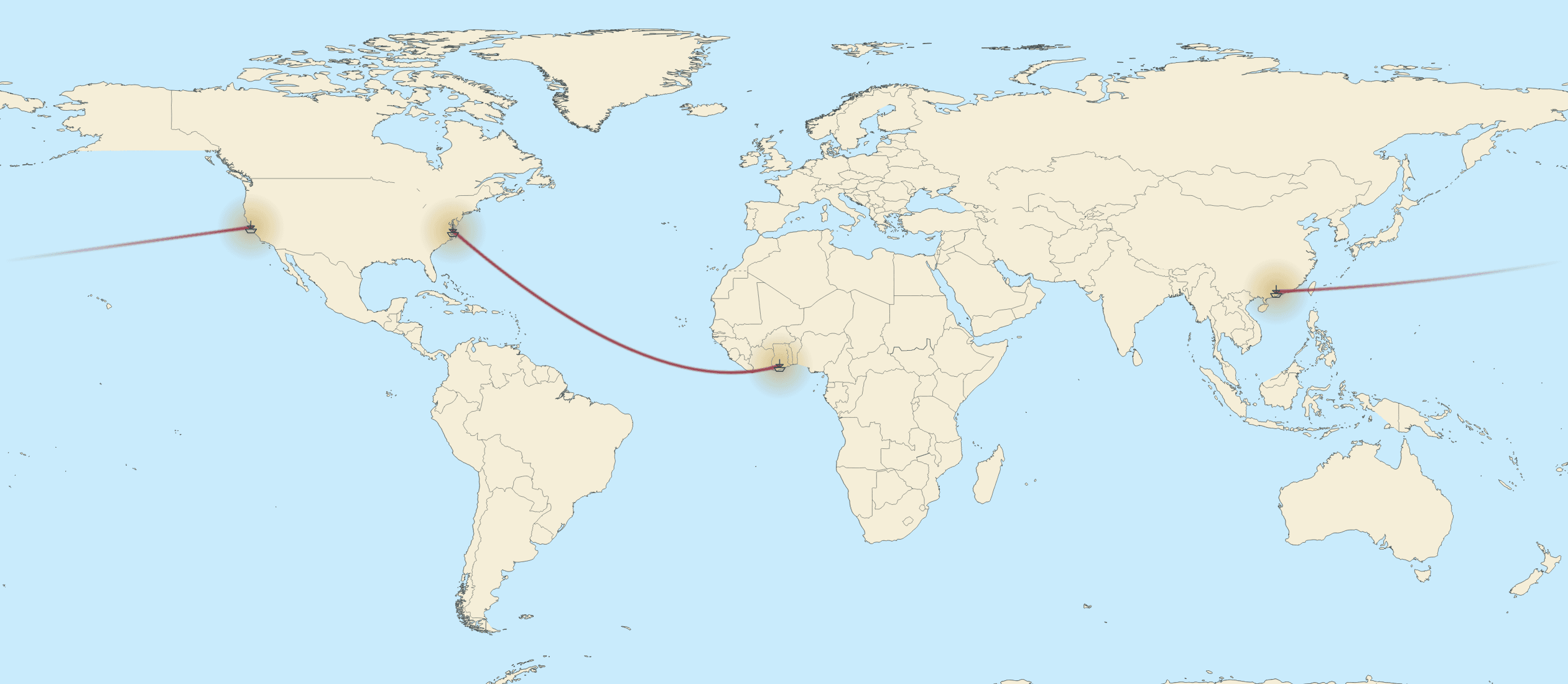
The most recognized chapter of forced human exploitation in American history begins in the 16th century, when Portugal began capturing and purchasing people from the African continent and trafficking them across the ocean. Other European nations followed. From 1525 to 1866 (a span of more than 300 years), an estimated 12.5 million enslaved people were shipped from Africa. Between 300,000 and 400,000 arrived in North America.
For the majority of that period, this wasn’t treated as a crime. It was law. It was commerce. It was codified.
Britain outlawed the slave trade in 1807. The United States banned it that same year, effective January 1, 1808, and in 1820 went further, declaring the trade an act of piracy punishable by death. Yet the last documented transatlantic slave voyage, bound for Cuba, didn’t arrive until 1867, nearly six decades after the law said it should stop. Laws, it turns out, are only as powerful as the will to enforce them and the communities willing to hold that line.
Did you know? It’s a common misconception that the U.S. didn’t ban the slave trade until 1820. It actually banned it in 1807, the same year as Britain. What happened in 1820 was an escalation: Congress classified slave trading as piracy, punishable by death. And while many people picture the Clotilda (the last known slave ship to reach U.S. shores, arriving in Mobile Bay in 1860) as the final chapter, the very last documented transatlantic slave voyage to the Americas actually landed in Cuba in 1867.
The Trafficking of Chinese Women (1850s–early 1900s)
As Chinese immigrants arrived in California during the Gold Rush and the construction of the Central Pacific Railroad, they became targets of racial violence and economic suspicion. Chinese women, in particular, were trafficked across the Pacific by organized criminal gangs and forced into prostitution in California and the American West.
The Page Act of 1875 was the first federal law to specifically address the trafficking of people into the United States. It prohibited the importation of women against their will for “immoral purposes.” It was also deeply flawed, effectively halting nearly all Chinese female immigration in the process. By the early 1880s, men made up 95% of the Chinese population in the U.S.
It’s a pattern we see repeatedly throughout this history: legislation that responds to trafficking often captures the crime imperfectly, and sometimes harms the very people it’s meant to protect.
Base map: Wikimedia Commons, CC BY-SA 3.0.
The First International Agreements (1904–1949)
By the early 1900s, European nations were alarmed by reports of women, often immigrant women, being coerced into forced prostitution. In 1904, the International Agreement for the Suppression of White Slave Traffic became the first international agreement on human trafficking, signed in Paris. Six years later, 13 countries signed an expanded Convention.
In 1921, the newly formed League of Nations convened 33 countries to sign the International Convention for the Suppression of Traffic in Women and Children. It was a meaningful step forward because it explicitly included children of all genders and dropped the racially coded “white slavery” language in favor of recognizing all victims, regardless of race.
After World War II, the United Nations adopted the first legally binding international anti-trafficking agreement in 1949. Progress was incremental and imperfect, but the international community was slowly building a shared language for what had always existed.
The Internet Changes Everything (1980s–Present)
The internet did not create human trafficking. But it dramatically expanded its reach, lowered its barriers, and made it possible for exploitation to happen without ever moving a victim across a state line.
Today, traffickers use social media platforms, gaming apps, direct messaging, and streaming services to recruit, groom, and exploit victims, often children. The National Center for Missing and Exploited Children received 26,823 reports of possible child sex trafficking in 2024 alone, a 55% increase from the year before. These aren’t cases happening in distant places. They’re happening in cities, suburbs, and small towns across the country, often in the same digital spaces students occupy every day.
In 2000, the United Nations adopted a landmark Protocol that, for the first time, acknowledged that men could be victims, expanded the definition of trafficking to include forced labor and organ harvesting, and provided a modern framework for international cooperation. The same year, the U.S. passed the Trafficking Victims Protection Act.
The Laws Are Catching Up, State by State
Here is what strikes me most about this history: almost none of it is taught, and public awareness is still catching up to how old this problem actually is.
Students sit in classrooms every day without knowing that human trafficking has been woven into the fabric of American life for centuries. They don’t know how it evolved, how it adapts, how it finds new victims by exploiting trust and technology. That knowledge gap is exactly what predators count on.
That gap is closing, unevenly, state by state. Texas passed SB 9 in 2019, requiring public schools to provide age-appropriate instruction on trafficking, child abuse, and family violence prevention. Florida became the first state in the nation to mandate K-12 trafficking-prevention instruction that same year, and California, Georgia, and Tennessee have since added their own school requirements too.
Did you know? Texas bill numbers like “HB 1” and “SB 11” get reassigned every two-year legislative session. HB 1 is almost always reserved for the state budget. The actual law requiring this instruction is Senate Bill 9, passed in 2019.
The requirements don’t stop at the classroom. Texas also requires annual human trafficking training for hotel and motel staff, and requires certain businesses, including hair and nail salons, to post trafficking-awareness signage. Neither idea started in Texas: Connecticut passed the first hotel staff training mandate back in 2016, and more than a dozen states now require something similar. Signage laws are even more widespread, with over twenty states requiring some form of posted notice, though exactly which businesses are covered (truck stops, salons, hotels, bars) varies a lot from state to state.
Through Their Eyes was built for adult audiences first. But the goal has always been bigger than that: partnering with school districts across the country to bring that same honest, dignity-first storytelling to high school students, especially the ones most likely to be targeted: the isolated, the unsupported, the ones searching for connection in the wrong places.
This didn’t start yesterday. And it won’t end tomorrow. But every student who walks out of a classroom with more awareness than when they walked in is one more person the darkness has a harder time reaching.
You can help close that gap. Support Room To Care so we can keep building programs like Through Their Eyes and bringing them into more classrooms.
Room To Care is a Dallas-based 501(c)(3) nonprofit dedicated to human trafficking and domestic violence awareness through documentary filmmaking and educational storytelling. Learn more about the Through Their Eyes program at roomtocare.com.
A note on accuracy: We’ve done our best to verify every date and figure in this piece against primary and government sources, and caught a few common misconceptions ourselves along the way (see the callouts above). But history is full of details that are easy to get slightly wrong, and small inaccuracies can quietly reshape a bigger story. We encourage you to dig into the sources below yourself, ask questions, and treat any single source, including this one, as a starting point rather than the final word.
Sources & Further Reading:
Read more

Behind the Stories: A Week of Filming
Room To Care spent this week in Frisco with survivors, cameras rolling and hours of footage captured. Here's where things stand and what comes next.
Scott Burch
Founder & Executive Director

Through Their Eyes Production Update: Filming Starts Next Week
Our first survivor interviews for Through Their Eyes begin April 28th. Here's what that means, what you'll see, and what we still need.
Scott Burch
Founder & Executive Director

Open Doors at The Potter's House
Room To Care joined VisioTech at The Potter's House in Dallas for an honest conversation about what it actually takes to keep children safe in an always-online world.
Scott Burch
Founder & Executive Director